


Page 126 - Feasibility Study of New Media Technology on Constructing Online Public Sphere
P. 126
Feasibility Study of New Media Technology
               on Constructing Online Public Sphere


                 With ICT developing at a staggering speed, a variety of social networking sites

            have sprung up in the last two decades. As some of the world’s most popular SNSs are
            blocked in China, a huge market for domestic social networking sites has developed.
            Figure 7 shows that 98.26% of the respondents use WeChat Moments and 85.22% of
            respondents use Weibo (similar to Twitter), which represent the top two popular SNSs
            in China. Also, 67.83% of the respondents use Q-zone, 61.74% of respondents use

            Renren (the functions and characteristics of these two SNSs are similar to Facebook). A
            majority of the respondents use or have registered more than one SNS and the number
            of BBS/forums and Blog users is 58.26% and 45.22% respectively, indicating that they

            are still regularly used by internet users in China.


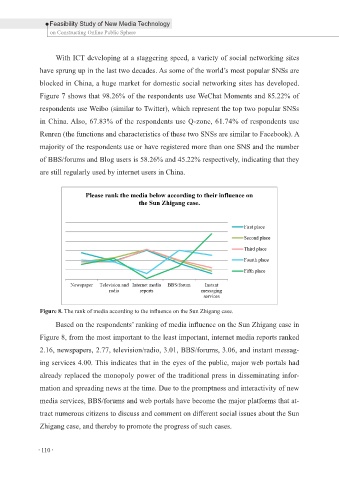
            Figure 8. The rank of media according to the influence on the Sun Zhigang case.
                 Based on the respondents’ ranking of media influence on the Sun Zhigang case in

            Figure 8, from the most important to the least important, internet media reports ranked
            2.16, newspapers, 2.77, television/radio, 3.01, BBS/forums, 3.06, and instant messag-
            ing services 4.00. This indicates that in the eyes of the public, major web portals had

            already replaced the monopoly power of the traditional press in disseminating infor-
            mation and spreading news at the time. Due to the promptness and interactivity of new
            media services, BBS/forums and web portals have become the major platforms that at-
            tract numerous citizens to discuss and comment on different social issues about the Sun
            Zhigang case, and thereby to promote the progress of such cases.


             110 10
             1

