


Page 194 - Feasibility Study of New Media Technology on Constructing Online Public Sphere
P. 194
Feasibility Study of New Media Technology
               on Constructing Online Public Sphere


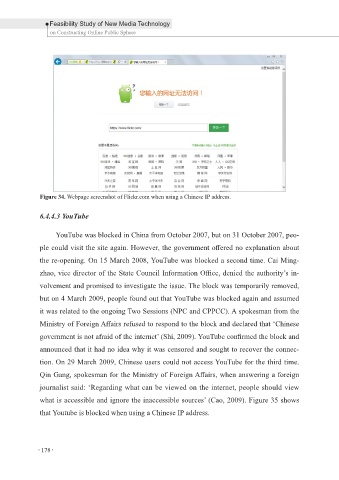
            Figure 34. Webpage screenshot of Flickr.com when using a Chinese IP address.

            6.4.4.3 YouTube


                 YouTube was blocked in China from October 2007, but on 31 October 2007, peo-
            ple could visit the site again. However, the government offered no explanation about
            the re-opening. On 15 March 2008, YouTube was blocked a second time. Cai Ming-
            zhao, vice director of the State Council Information Office, denied the authority’s in-

            volvement and promised to investigate the issue. The block was temporarily removed,
            but on 4 March 2009, people found out that YouTube was blocked again and assumed
            it was related to the ongoing Two Sessions (NPC and CPPCC). A spokesman from the
            Ministry of Foreign Affairs refused to respond to the block and declared that ‘Chinese

            government is not afraid of the internet’ (Shi, 2009). YouTube confirmed the block and
            announced that it had no idea why it was censored and sought to recover the connec-
            tion. On 29 March 2009, Chinese users could not access YouTube for the third time.
            Qin Gang, spokesman for the Ministry of Foreign Affairs, when answering a foreign

            journalist said: ‘Regarding what can be viewed on the internet, people should view
            what is accessible and ignore the inaccessible sources’ (Cao, 2009). Figure 35 shows
            that Youtube is blocked when using a Chinese IP address.


             178
             178

