


Page 201 - Feasibility Study of New Media Technology on Constructing Online Public Sphere
P. 201
Chapter 7. The Yihuang incident


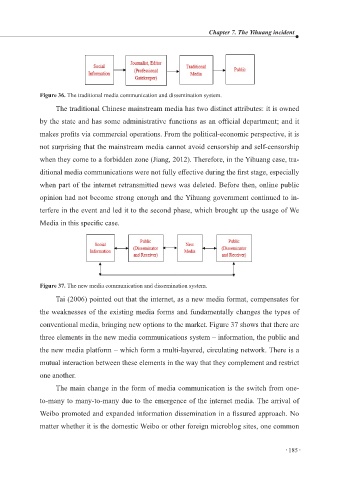
            Figure 36. The traditional media communication and dissemination system.
                 The traditional Chinese mainstream media has two distinct attributes: it is owned
            by the state and has some administrative functions as an official department; and it

            makes profits via commercial operations. From the political-economic perspective, it is
            not surprising that the mainstream media cannot avoid censorship and self-censorship
            when they come to a forbidden zone (Jiang, 2012). Therefore, in the Yihuang case, tra-

            ditional media communications were not fully effective during the first stage, especially
            when part of the internet retransmitted news was deleted. Before then, online public
            opinion had not become strong enough and the Yihuang government continued to in-
            terfere in the event and led it to the second phase, which brought up the usage of We
            Media in this specific case.


            Figure 37. The new media communication and dissemination system.
                 Tai (2006) pointed out that the internet, as a new media format, compensates for
            the weaknesses of the existing media forms and fundamentally changes the types of
            conventional media, bringing new options to the market. Figure 37 shows that there are

            three elements in the new media communications system – information, the public and
            the new media platform – which form a multi-layered, circulating network. There is a
            mutual interaction between these elements in the way that they complement and restrict

            one another.
                 The main change in the form of media communication is the switch from one-
            to-many to many-to-many due to the emergence of the internet media. The arrival of
            Weibo promoted and expanded information dissemination in a fissured approach. No
            matter whether it is the domestic Weibo or other foreign microblog sites, one common


                                                                                    185
                                                                                    185

