


Page 149 - Feasibility Study of New Media Technology on Constructing Online Public Sphere
P. 149
Chapter 5. The Sun Zhigang incident


            amendment to the legal system to prevent such abuses in the future (Hand, 2007).


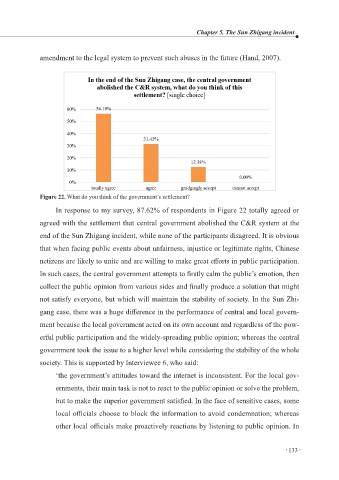
            Figure 22. What do you think of the government’s settlement?
                 In response to my survey, 87.62% of respondents in Figure 22 totally agreed or
            agreed with the settlement that central government abolished the C&R system at the

            end of the Sun Zhigang incident, while none of the participants disagreed. It is obvious
            that when facing public events about unfairness, injustice or legitimate rights, Chinese
            netizens are likely to unite and are willing to make great efforts in public participation.

            In such cases, the central government attempts to firstly calm the public’s emotion, then
            collect the public opinion from various sides and finally produce a solution that might
            not satisfy everyone, but which will maintain the stability of society. In the Sun Zhi-
            gang case, there was a huge difference in the performance of central and local govern-
            ment because the local government acted on its own account and regardless of the pow-

            erful public participation and the widely-spreading public opinion; whereas the central
            government took the issue to a higher level while considering the stability of the whole
            society. This is supported by Interviewee 6, who said:

                 ‘the government’s attitudes toward the internet is inconsistent. For the local gov-
                 ernments, their main task is not to react to the public opinion or solve the problem,
                 but to make the superior government satisfied. In the face of sensitive cases, some
                 local officials choose to block the information to avoid condemnation; whereas
                 other local officials make proactively reactions by listening to public opinion. In


                                                                                    133
                                                                                    133

