


Page 146 - Feasibility Study of New Media Technology on Constructing Online Public Sphere
P. 146
Feasibility Study of New Media Technology
               on Constructing Online Public Sphere


            5.3.3 The government’s performance during the information regime III

                 The growing wealth of Chinese citizens and the availability of advanced ICTs
            have precipitated Information Regime III, in which the media industry has stepped

            into the digital age. A growing proportion of Chinese citizens gained the technological
            capability to express their views via digital networks around the country and, indeed,
            around the globe. The result has been a freer expression of public opinion, although
            free speech could be transitory due to computerised censorship and the repression of

            dissidents.


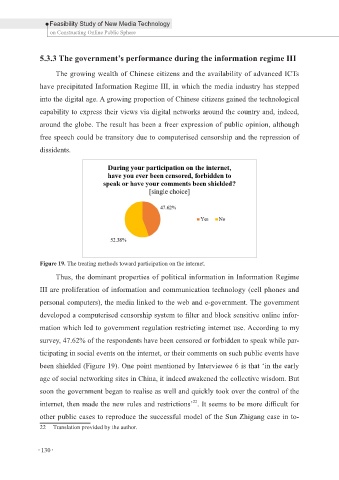
            Figure 19. The treating methods toward participation on the internet.
                 Thus, the dominant properties of political information in Information Regime
            III are proliferation of information and communication technology (cell phones and

            personal computers), the media linked to the web and e-government. The government
            developed a computerised censorship system to filter and block sensitive online infor-
            mation which led to government regulation restricting internet use. According to my
            survey, 47.62% of the respondents have been censored or forbidden to speak while par-

            ticipating in social events on the internet, or their comments on such public events have
            been shielded (Figure 19). One point mentioned by Interviewee 6 is that ‘in the early
            age of social networking sites in China, it indeed awakened the collective wisdom. But
            soon the government began to realise as well and quickly took over the control of the
                                                        22
            internet, then made the new rules and restrictions’ . It seems to be more difficult for
            other public cases to reproduce the successful model of the Sun Zhigang case in to-
            22  Translation provided by the author.


             130
             130

