


Page 148 - Feasibility Study of New Media Technology on Constructing Online Public Sphere
P. 148
Feasibility Study of New Media Technology
               on Constructing Online Public Sphere


            dicated, ‘the internet, unlike any of the conventional media, was primarily invented as

            a technology to eliminate the possibility of a central control mechanism’. It facilitated
            information dissemination by exposing ordinary Chinese citizens to a brand-new and
            broader environment. Zheng (2008) assessed the phenomenon as pressure for political
            authority and social support for reform in China.
                 With the rapid development of ICT in China, government departments have to

            deal with public affairs effectively and immediately, and also react to the controversial
            impacts of online public participation skilfully and intelligently.


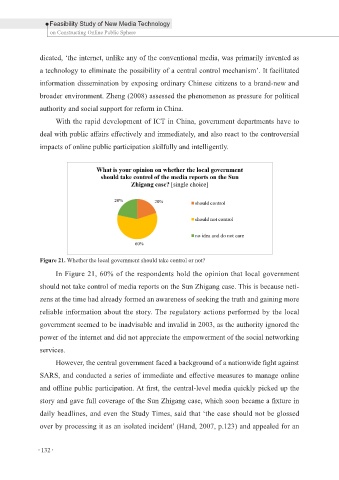
            Figure 21. Whether the local government should take control or not?

                 In Figure 21, 60% of the respondents hold the opinion that local government
            should not take control of media reports on the Sun Zhigang case. This is because neti-
            zens at the time had already formed an awareness of seeking the truth and gaining more
            reliable information about the story. The regulatory actions performed by the local
            government seemed to be inadvisable and invalid in 2003, as the authority ignored the

            power of the internet and did not appreciate the empowerment of the social networking
            services.
                 However, the central government faced a background of a nationwide fight against

            SARS, and conducted a series of immediate and effective measures to manage online
            and offline public participation. At first, the central-level media quickly picked up the
            story and gave full coverage of the Sun Zhigang case, which soon became a fixture in
            daily headlines, and even the Study Times, said that ‘the case should not be glossed
            over by processing it as an isolated incident’ (Hand, 2007, p.123) and appealed for an


             132
             132

